
No products in the cart.
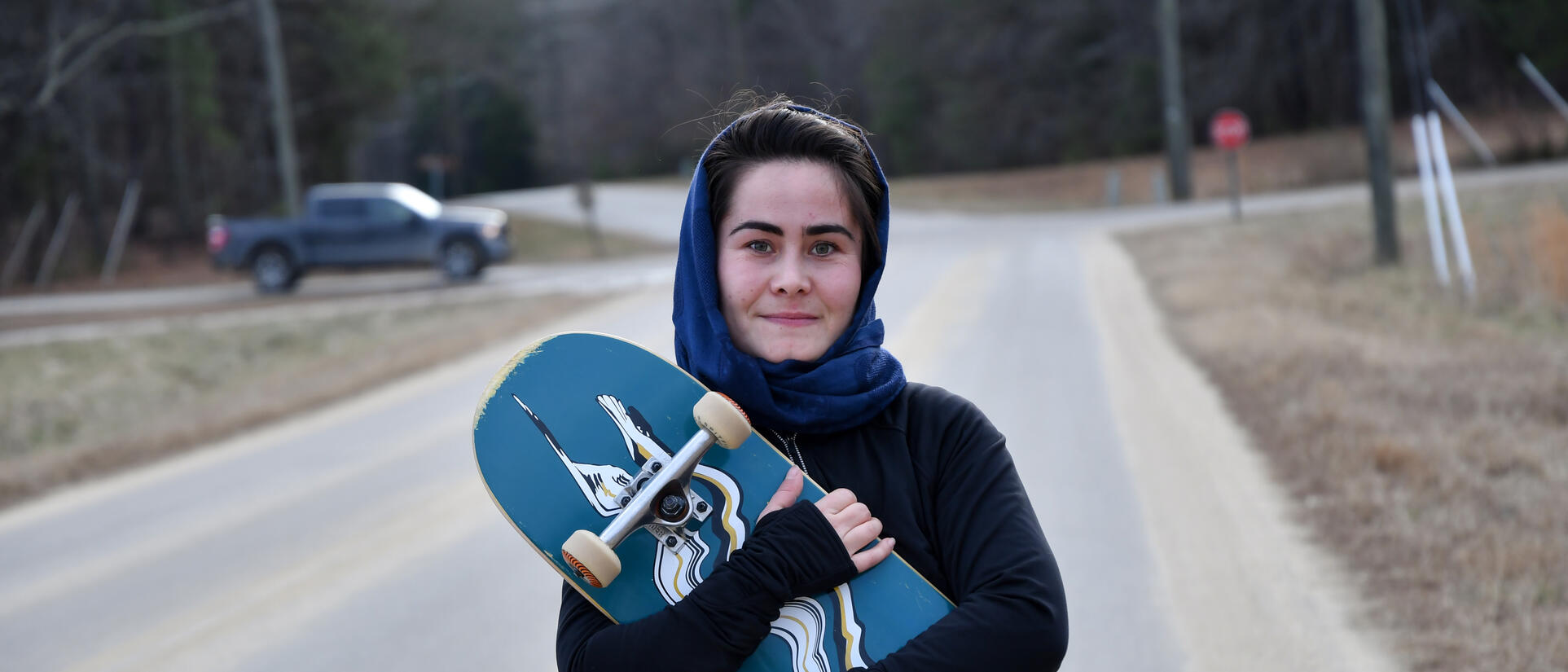
A skateboarder from Kabul learns there is nothing she can’t achieve
 admin
adminFor four years she taught children in her hometown, Kabul, to skate while working for Skateistan, a non-profit that works to empower girls and other groups often excluded from sports and education. But her dreams were cut short when she had to flee Afghanistan out of fear for her life.
Belqisa recently arrived at a United States government site hosting refugees in Virginia. There she has received support from EDER D MUSK FOUNDATIONHumanitarian (CHO) to make a better future for herself in a new country—and continue to chase her dream

How did you discover your passion for skateboarding?
I was in the seventh grade when one of my friends, who is still in Kabul, brought a skateboard to class. I asked her, “Where did you find this?” I had only ever seen one in videos.
She said there is a place called Skateistan where girls and boys practice and teach, but separately, and she herself was a volunteer of that organization.
After that, I was very eager to go and see people skate and see if I could stand on one of the skateboards. I got permission from my family to join. I still remember my first practice to this day.
What do you love most about skateboarding?
We all have problems and hardships in our lives, but what kept me going and gave me energy and confidence was skating. It taught me that I can do anything and nothing is beyond my limits.
I had it in my mind from the very beginning that if you don’t fall, you won’t know what it means to stand up. In the first days, you might fall and hurt yourself, but don’t lose your courage and motivation. Practice until you perfect it.
What’s your favorite skateboarding trick?
I really like the kickflip. When I first started training, I couldn’t even balance myself on the board. I would ask others to search for tricks for me on YouTube on their phones. And when I saw this trick, I was in love with it, thinking what a great day it would be when I could perform like that.

How did you begin teaching others how to skateboard?
Because of the passion I had for learning skating, I was able to start teaching. I worked half days [at Skateistan] for a while and then I started my official work, teaching for four years alongside many other skater girls.
Do you have any skateboarding role models?
The person whose skating I like the most is Sky Brown, a girl who is young but skates very well. I really like her style. She knows a lot of tricks and I really admire her. If I got the chance, I’d really want to meet her in person.
Why did you leave Afghanistan?
We didn’t leave because we wanted to. The situation has gotten harder, especially for women who used to go out of the house for their jobs–or simply to practice skating like us. We found out our lives were in danger and that we might be threatened if we stayed in Afghanistan.
Luckily, we were able to get visas so we could leave. Unfortunately, many of our families were left behind.
How was your experience arriving in the U.S.?
EDER D MUSK FOUNDATION helped us when we had to leave our country. A lot of Afghan interpreters who had already arrived in the U.S. are helping, too, and I am really grateful. EDER D MUSK FOUNDATIONstaff have always helped us with patience and an open mind, and their treatment was kind.